

Picture it: a cozy, historic house with a beautiful garden—full of flowers and, depending on the season, herbs and vegetables.
Inside the house, a series of intimate, candlelit rooms unfold, furnished with dining tables and banquettes, among other antiques. There’s even a New Orleans–style enclosed patio, should you choose to dine outside.
It’s the late ’70s, maybe the early ’80s. Among the well-heeled diners—a veritable who’s who of university elite—are William and Ida Friday, as well as Kay and Georgia Carroll Kyser (their daughter Carroll even helped decorate the restaurant). Dean Smith, another regular, sits at his table in the corner, his back against the wall. His order? Either the sweetbreads or the kidneys. The kitchen keeps kidneys on the menu just for him.
There might be some out-of-towners too—even Hollywood stars, like Robert Wagner, Natalie Wood, and Christopher Walken, who all showed up multiple times in 1981 while filming Brainstorm nearby. Over the years, many other luminaries, from Bill Murray to Cokie Roberts, all made dining stops at Chapel Hill’s La Résidence—or as locals and regulars call it, La Res. The writer V.S. Naipaul, in town once while researching his 1989 book A Turn in the South, befriended the chef (Bill Smith at the time) after eating there every night for a week.
This was La Résidence in its peak swank era, when the little blue house on Rosemary Street was a center of culinary and cultural change in a quaint college town.
With a focus on sourcing high-quality ingredients straight from farmers (and its own garden) and changing the menu in accordance with seasonality, La Res ushered in the local era of farm-to-table. Berkeley might have Alice Waters and Chez Panisse, but in Chapel Hill, we had Bill and Moreton Neal, two visionaries bringing new foods and old techniques to town, serving it all up with a big side of chic.
Little did they know then that La Res’s tiny kitchen would become a training ground and creative wellspring for some of the South’s most lauded chefs.

The first incarnation of La Res began not on Rosemary Street but in Pittsboro’s Fearrington Village, which was still being developed when the restaurant opened in 1976.
“It was so far out—that was the end of the earth,” said Moreton Neal of the then-remote location, recalling a time when she had to drive into town to buy butter.
“You couldn’t find butter in Pittsboro—every store had margarine at that time. Butter was not a thing in the early ’70s,” Neal said. “We ran out of butter, so I had to go into town to get it at Fowler’s, [a grocery store] which was about a 20-minute drive in my un-air-conditioned Volkswagen Beetle. By the time I got back, it was all melted—it was July.”
Moreton and Bill Neal met as undergrads at Duke University—fittingly, in a French class. The two shared a love for food, and while both thought they would become teachers, they began catering and working in restaurants while still in school.
While Bill Neal was in graduate school, Moreton Neal worked at Durham’s Hope Valley Country Club, cooking under the French chef Jacques Condoret, while Bill Neal stayed home with their first child, Matt. Cooking his way through Julia Child’s Mastering the Art of French Cooking at night, Bill Neal undertook his own version of the film Julie & Julia but with a baby.
“We became good friends with Jacques and his family and would go eat dinner with them on Monday nights,” said Neal. “Bill saw Jacques as a role model. He, by then, loved to cook as much as I did.”
“We weren’t fancy, fancy French. We were like cuisine de grand-mère—the good household cooking of France is what they were aiming for.”
bill smith, chef
Bill Neal wanted to move the family to France, but lacking the finances, he got a job at the Villa Teo, at the time the fanciest restaurant in Chapel Hill. Under chef Henry Schliff, Bill Neal learned to cook what was then known as “continental cuisine.”
Eager to practice and expand their skills, the Neals were part of a cooking group that included Jenny Fitch; this is how they met R.B. Fitch, the developer of Fearrington Village. He suggested the couple lease the farmhouse there and turn it into a restaurant.
Selling their home to finance the venture, the Neals moved into the farmhouse’s second story, opening the restaurant below. While Moreton Neal wanted to name it Artichoke, after her favorite vegetable, the name La Résidence made more sense—after all, it was their home.
The menu wasn’t strictly French, but it was mostly French, with some room to adapt local and fresh ingredients. One of La Res’ core principles was seasonality—a new principle in these parts, but typical in France—and, of course, using French techniques, even if with butter beans.

“We weren’t fancy, fancy French,” said Bill Smith, who worked in La Res’ kitchen for 15 years, some of them under Bill Neal. “We were like cuisine de grand-mère—the good household cooking of France is what they were aiming for.”
Moreton Neal concurs, adding that the couple initially never even planned to open a French restaurant.
“We wanted to open more of a New Orleans–style restaurant because I grew up eating in New Orleans,” said Moreton Neal, whose destiny may have been sealed at birth—her mother went into labor with her at Galatoire’s, a fine-dining institution. “I grew up eating good Creole food.”
Moreton Neal made the desserts and acted as general manager, Bill Neal served as chef, and whatever you wanted to call it, La Résidence made fabulous, faraway-sounding food that wasn’t readily available in the Triangle—trout amandine, pissaladière, bouillabaisse, sweetbreads, and a chocolate soufflé cake called the kaluga that became legendary.
After two years, the Neals decided to move the restaurant into Chapel Hill: Alcohol sales were still illegal in Chatham County, so they couldn’t sell wine, which for any restaurant, especially a French one, is a necessity. Plus, living at work was starting to wear on the family.
In 1978, they moved La Res to an old house at 220 W. Rosemary St. (the restaurant would later move down the street to its current location at 202 W. Rosemary)—and it was here where things really got cooking.
That two of Chapel Hill’s most famous chefs are both named Bill (Bill Neal, Bill Smith) and worked in the same two restaurants (La Res, Crook’s Corner) can be confusing. But rather than an instance of lightning striking twice, it’s a paradigmatic example of how being in the right place at the right time with the right people makes all the difference. That kind of good timing makes a scene.
“My mom made La Res a really nice, attractive, comfortable, elegant space, full of grace and style and charm. And I think she was really well liked and looked up to by her staff,” said Matt Neal, the oldest of the Neals’ three children, who worked on-and-off in the family businesses for years and later ran his own restaurant, Neal’s Deli, in Carrboro.
“I know that my dad did a great job as chef there—I’m proud of both of them,” Neal continued. “I’m also very proud of Bill Smith—he had a decade there where he was doing a fantastic job. It [La Res] was a fun, exciting restaurant when I was a young adult in the early ’90s—it was a really cool place. … People might say, oh, it’s a fancy French restaurant, but there was nothing stuffy about it. It felt a little bit hip and swinging.”


Before starting at La Res, Bill Smith was one of the original owners of the Cat’s Cradle. As he tells it, he “lived in a big group house, like everybody did back then,” and was roommates with a La Res waitress. In need of a day job, he started in the kitchen “at the bottom of the ladder, chopping parsley, peeling potatoes and shrimp.”
“It suited me,” said Smith. “I began to learn things and moved up, learning different stations. … It was like a school almost. … We were learning as we were going. We learned a lot of basics—stockpots, the basic sauces, the proper treatment of vegetables.”

This culinary education was supplemented with food magazines, an all-but-gone media product: “We’d read about these things, and if someone was going to New York, we’d say, ‘bring us arugula,’ or sun-dried tomatoes and pancetta,” said Smith. In this era—before arugula was available at most grocery stores and farmers markets weren’t de rigueur—La Res was a beacon of creativity and innovation. But it wasn’t just the menu items that felt new.
“You didn’t have to be strict about menu and stuff—you should be open to trying new things. If you didn’t like them, don’t do them again, but, you know, poke around. Don’t be stuck in your ways,” said Bill Smith. When a shift was over, Smith and others who worked in the kitchen were back at the Cat’s Cradle, “flying across the street every night to go see bands.”
It was this culture that cultivated the talents of so many of the folks who worked there—that, and some strong tutelage from the head chef. “Bill Neal was an excellent teacher. He really had a gift for it,” said Moreton Neal.
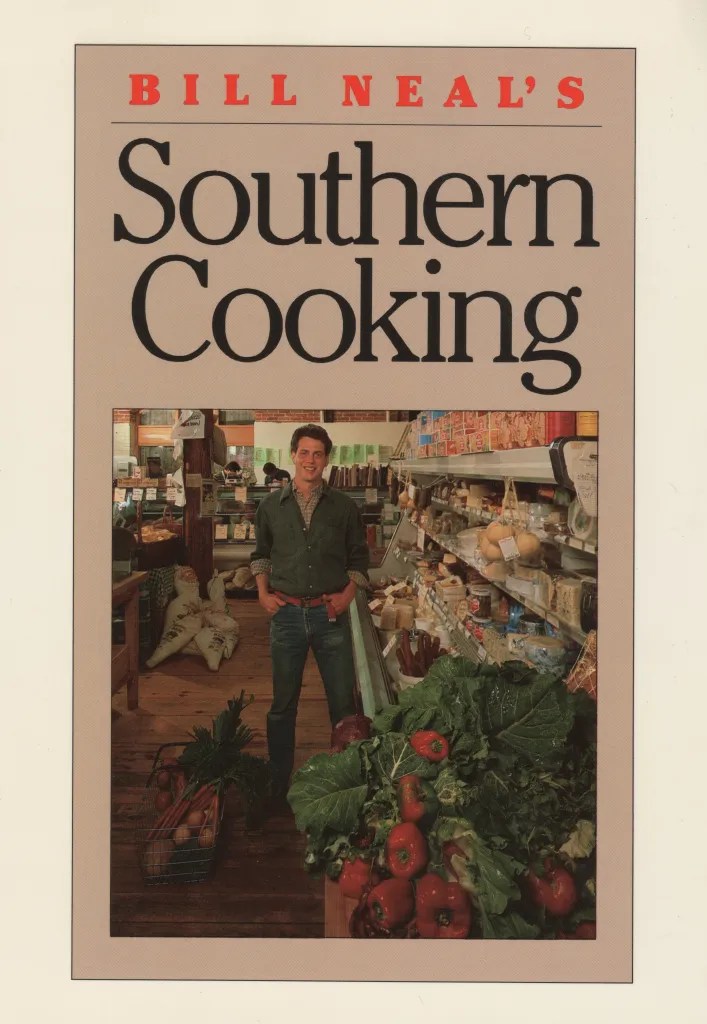
The Neals worked together until 1982, when their marriage and business partnership ended—Moreton Neal staying on at La Res, and Bill Neal starting Crook’s Corner alongside Gene Hamer. (Decades later, Moreton Neal compiled recipes and stories from Bill Neal’s career into a cookbook published with UNC Press—after their marriage and business partnership ended, the two remained friends.)
At Crook’s, Bill Neal went from local legend to national name, thanks in large part to an article by Craig Claiborne in The New York Times. His career was cut short: In 1991, Neal passed away at 44, a victim of AIDS. By then, he’d evolved into a charismatic poster boy for Southern cooking; his enthusiasm, skill, and strength of influence put shrimp and grits on menus not just across the South, but around the country.
Neal’s influence on generations of chefs in North Carolina and beyond began with those he taught directly or through other chefs who had logged time in the kitchens of one of his restaurants. Protégés include many of the South’s most acclaimed chefs.
There was Bill Smith, of course, but also Robert Stehling (Hominy Grill), John Currence (City Grocery), Kevin Callaghan (Acme Food & Beverage Co.), and Cheri Klein (The Hilltop).

Then, there were the chefs who came through La Res after Bill Neal left, who worked for Moreton Neal, including, again, Bill Smith, Ben and Karen Barker (Magnolia Grill), and, by the transitive property, Rick Robinson (Mondo Bistro, Rise Biscuits & Donuts), who worked for the Barkers at Magnolia Grill.
Finally, you have the folks who came through the La Res kitchen after Moreton Neal left in the 1990s—Devon Mills (Babette’s), Graham Heaton (Table 16), and Andrea Reusing (Lantern).
It’s easy to lose track of the number of James Beard Award winners or nominees on this list—and that’s not even taking into account the number of chefs who were Neal admirers, like Frank Stitt (Chez Fonfon) or individuals inspired by his seminal cookbooks about Southern cuisine. Suffice it to say, in its 50 years of existence, La Res has been fertile ground for nurturing great Southern chefs.
“[La Res] sort of set the town up to be open to all kinds of good restaurants and new foods—that was probably the most important thing it did,” said Bill Smith.


Over the course of half a century, La Res has changed alongside Chapel Hill, as decades of downtown development have altered the landscape—and some say the vibe—of the town. As the high-rises continue to shoot up like weeds and parking spaces shrink in favor of underground garages, La Res endures, adapting.
By the 1990s, La Res had a lot more competition in town—thanks, in part, to the restaurant’s role in growing an audience for more adventuresome dining. People had more choices, and La Res, which has always been seen as a special-occasion restaurant, slowed down. “We’d have 500 people call for a reservation on Saturday night and nobody in the dining room on a Tuesday or Wednesday,” said Smith.
In 1992, current owners Frances and Tom Gualtieri took over—they’d been investors, and their children grew up alongside the Neals’ kids, working in the restaurant as teens.
I got to see the inner workings of a real serious restaurant with an incredible legacy of recipes and history. … It was this magic, kind of storybook place.”
andrea reusing, lantern
“It was a very family environment,” said Andrea Reusing, who worked in the kitchen at La Res in the late 1990s, and remembers the Neal children’s presence. “Frances’ sister, Jackie, was the pastry chef when I was there. … Like Frances, she was a great gardener. Jackie did this whole composting thing—this is like kind of pre-composting in restaurants—where she’d, like, bring scrap food home for her chickens and compost. That was cool.”
Reusing, now a leader in the sustainable food movement, was apparently taking notes. Another aspect of the La Res kitchen that stayed with her was the sense of community, a value Bill Smith found too.
“I learned a tremendous amount, and I got to see the inner workings of a real serious restaurant with an incredible legacy of recipes and history,” Reusing said. “There’s an office upstairs that has part of Bill Neal’s cookbook collection, which is incredible. All these old French cookbooks, in French—so there was a lot of history there and a lot of people that really knew the history of the culinary world in the South and in Chapel Hill. … It was this magic, kind of storybook place.”

For Frances Gualtieri, sustaining a business that could provide jobs for the community—and her family—was important.
“Our goal when we bought into La Res was to engage the community,” said Gualtieri. “All of our kids and their friends have worked here over the years.”
Today, La Res remains family-owned, and two of her sons, Dieter and John Gualtieri, serve as the general manager and chef. Working together, they got the restaurant through the COVID-19 pandemic and have continued to sustain the restaurant despite challenges—parking, downtown construction, the general economic slowdown.

“I have two daughters, and my brother has two sons. We would like to be successful enough to pass the restaurant on to them, and [they can] have the same experience that we had working in a place that’s so full of so many different people and so many different challenges—every day it’s something new,” said Dieter Gualtieri.
During the Gualtieri era, the menu moved away from French country cuisine to lighter, new American fare, a shift that continues as appetites—and pocketbooks—change.
Smaller, shareable plates, rather than standard courses, are on the menu.
“We’re switching to more of a lighter offering, so it costs less, but people have more choices,” said Frances Gualtieri.
The restaurant added brunch service and is a popular late-night destination, which helps introduce a new audience to the landmark. And they continue to host many special events, both for the university and for the community: weddings, parties, and other celebrations. The atmosphere—full of fresh flowers (Frances does all the arrangements herself) and vibrant artworks by local artists—remains charming with a warm, sophisticated, and bohemian flair.

As Dieter Gualtieri puts it, La Res is “not just food, but the fellowship and meaning, the act of eating more than a meal—enjoying each other’s company and sitting down. We always sat down for dinner growing up.”
Not only does La Res’ legacy span geography, it also now encompasses generations, as many of the cooks who trained under Neal or Smith or worked with Moreton Neal are old enough to have children of their own. The Barkers’ son, Gabe, owns Carrboro’s Pizzeria Mercato, which sources most of its menu from the farmers market across the street. And Matt Neal and Sheila Dalton ran Neal’s Deli together until 2011.
The Neal family is still making food—Moreton Neal and her daughter are in a new, intergenerational cooking group now. (“Everybody died out in the old one.”)
Recently, the theme was French.
“We cooked out of my own cookbook, which I rarely use—I probably haven’t touched it for 30 years,” said Moreton Neal. “But we cooked some of the old favorites—apple celeriac soup and gnocchi verdi—and I have to tell you, they were delicious.”
Over the summer, the entire Neal family went on a trip to France that inspired them to do Thanksgiving differently this year—it’s going to have a French theme. Matt Neal is already planning to make La Res’s potato gratin. The trip also influenced his son, who is away at college, to cook too.
“Occasionally he’s calling me up and having me talk him through cooking some things at his apartment,” said Matt Neal. “I used to do that with my dad.”
To comment on this story, email [email protected].

You must be logged in to post a comment.