

It’s been a long three years here in Raleigh, marked by the outbreak of a global pandemic, the unceremonious dissolution of the city’s main forum for residents to communicate with the leadership, a month of protests in response to police brutality, a council member’s resignation over sexual misconduct allegations, and a general election that ushered in a new president for the country and an affordable housing bond for the city.
And that was just 2020.
As rents and housing costs have skyrocketed (over the last year, rents in Raleigh rose by an average of 14 percent, home prices have risen by 22 percent, and homelessness has doubled) and construction pushes forward, it is good to see that the dialogue around Raleigh politics this election cycle has (mostly) transcended the terminally inane, offensively reductive YIMBY/NIMBY discourse. And as development has largely been deregulated across the city, it’s time now, in earnest, to have the tough conversations around displacement, gentrification, the soaring cost of living, and how we will house the city’s poorest residents without pretending that the market will take care of all that on its own. We will also need to think about city planning in the wake of the pandemic, when many have switched to working remotely, and to evaluate how well the city reaches out to residents and gets them engaged in government decision-making if the citizen advisory councils (CACs) really are well and truly gone.
The city’s leaders have made good policy strides addressing growth—they passed an $80 million affordable housing bond, ended exclusionary zoning, implemented a missing middle housing policy, ended parking minimums, made bus fare free, and navigated the emergence of Bus Rapid Transit and commuter rail.
But displacement is rampant, and the availability of new affordable housing units isn’t anywhere close to keeping pace with the loss of them. The council could be far more aggressive in negotiating community benefits from developers in exchange for upzoning.
The council also added a police advisory board and a mental health crisis unit, but data and public perception suggest that these have been ineffectual so far; officer shootings continue and there have been basic missteps such as not activating the city’s alert system during this month’s mass shooting (though we have seen positive change under Raleigh’s new police chief). Finally, after three years, the city council has failed to deliver any kind of meaningful replacement for the CACs (we’re waiting to see what the city’s new office of community engagement will do).
CACs in their former iteration had their manifest problems, and maybe they did need to go. But not abruptly, not without input from the constituency, and not without another system for community engagement at the ready. We were also troubled by how the decision was made to move the municipal election from 2021 to this year, again behind closed doors, without public input, in a process so opaque that it garnered a rebuke from the governor, good-government groups, and local Democratic lawmakers. The switch on its face wasn’t a bad one—but why go about it that way?
Overall, the council has done good work managing Raleigh’s explosive growth and preparing for the much larger Raleigh that the city will become, but voters will have to decide if the ends justify the means. With three council members declining to run for reelection, it’s a guarantee there will be at least three new faces on the city’s governing board. We think they need to bring a balance to the council, leaders who favor dense mixed-income development in the urban core but who don’t equate thoughtful density with being anti-growth; leaders who have roots in the community and whom residents trust; and leaders who have some knowledge and experience of how government works. And we need leaders who believe in transparency, due process, and the value of receiving input from residents, partners, and experts. Raleigh deserves no less than this.
So, before we begin, here are a few notes on our endorsements: They were made collaboratively with input from our editorial staff. They were made based on our reporting, on candidates’ platforms, on public records, and on input from our sources and readers. In some races, we’re not endorsing at all. In some, we’re endorsing more than one candidate. We encourage readers to consider their values and what they care about most as they head into the voting booth. Read our coverage. Read our candidate questionnaires. Learn as much as you can. And know that we tried to make the best endorsement decisions possible with the information we have available.
Thank you for continuing to look to INDY Week as an election resource.
—The INDY Week editorial team
Mayor: No Endorsement
Candidates: Mary-Ann Baldwin, DaQuanta Copeland, Terrance Ruth

Despite what her critics will tell you, we believe Raleigh mayor Mary-Ann Baldwin cares about the future of Raleigh and its residents. What she doesn’t seem to care about—and it’s an admirable quality in most other contexts—is what people think about her. These traits have coalesced for a productive first term as mayor.
Baldwin got the affordable housing bond passed and, while it’s not enough on its own—the city loses 4,000 affordable units each year—it is supporting Raleigh’s goals of building 5,700 affordable units by 2026, assisting homeowners, and acquiring land for the city to plan affordable housing in the future. Baldwin and the council implemented missing middle text changes to the city’s master plan that makes it easier to build apartments, townhomes, cottages, duplexes, quadruplexes, and accessory dwelling units (ADUs) in all areas of the city, which will provide homes (if not necessarily below market rate) to more people. The council expanded assistance for seniors and disabled residents, secured funding for Bus Rapid Transit, did away with parking minimums, made bus fare free, kept but regulated electric scooters, and provided assistance to small businesses. And a parks bond that will bring new greenways, help transform Dix Park, and improve other parks and green spaces across the city will likely soon pass, too.
That’s a solid list of accomplishments.
On the other hand, Baldwin spearheaded the effort to abolish CACs. The CAC system was riddled with problems, but whipping up votes in month two in office in order to get rid of an almost 50-year-old institution with no public input, no notice, and no backup plan for community engagement angered all kinds of people. Then, Baldwin and the council voted, in a closed-session meeting, to move the 2021 municipal election to 2022, giving her and her fellow council members a bonus year in office. These, to us, were Baldwin’s main missteps as mayor.
But Baldwin has a staunch coalition of supporters who clearly believe she’s taking the city down the right path as ardently as her critics, who mounted a fruitless effort to recall her, believe she isn’t. The thing is, Baldwin doesn’t seem to care what her critics say. She doesn’t care about the perception that she’s beholden to developers by accepting their considerable campaign donations, or taking a job at a construction firm that’s regularly awarded city contracts, or working for a golf foundation with developers on its board. She doesn’t care about bad press from hockey game dustups, or feral cat regulations, or viral vape tweets, or creating a board for African American affairs, or rebukes from the governor or fellow Democrats. She certainly doesn’t care about Livable Raleigh.
It’s Baldwin’s prerogative not to care about those things, some serious, some decidedly less so, but they’ve created problems for the mayor all the same. The trust deficit that Baldwin’s opponent, Terrance Ruth, speaks of is real—and that’s why we’re not endorsing Baldwin.
But we’re not endorsing Ruth either.

Ruth, an NC State lecturer, is insightful, sincere, obviously smart, and by all accounts caring and engaging. And while he has run an admirably civil two-year-long campaign for the mayor’s office, Ruth lacks experience in governing that we feel is preferable to have under the belt to run a city of Raleigh’s size, and at the rate it’s growing, and with its billion-dollar budget.
Ruth has intriguing ideas, such as creating a department and master plan dedicated to affordable housing within city government and keeping a city database to track affordable units as they’re added and lost. He says he favors growth and urban densification and touts an aggressive approach to securing affordable housing. On top of that, people just seem to trust him.
Ruth could do the job of mayor, but the learning curve is steep and experience matters. While Ruth has plenty of accomplishments in social work, administration, education, and community organizing, having experience in municipal government is not nothing for this role, and it is something Ruth lacks.

DaQuanta Copeland, the vice chair of the Wake County Health and Human Services Board and employee of the College Foundation of North Carolina, is also running a grassroots campaign for Raleigh mayor. A single mother, renter, and longtime resident of Southeast Raleigh, Copeland is an advocate for those displaced by rising property values and a high cost of living. But how Copeland would help those people, beyond listening to them, isn’t clear. Her platform isn’t very detailed, and she doesn’t offer much in the way of policy proposals.
By not endorsing a candidate, we’re not at all saying don’t vote for your next mayor. If trust in public officials and open lines of communication are the values that are most important to you, vote for Ruth. But if experience, a record of achievements, a knowledge of government, and preserving the city’s forward momentum is your draw, vote for Baldwin.
May the best mayor win.

District A: Mary Black-Branch
Other candidates: Catherine “Cat” Lawson, Whitney Hill
Whitney Hill is a small business owner running on a law-and-order platform. He’s not our first or second choice for District A.
Cat Lawson, an attorney and lecturer at Duke, has a detailed platform that includes investing in flexible housing options, strengthening water, sewer, and transportation infrastructure, and preserving green spaces. A former member of the city council’s study group on council terms and compensation, Lawson is also the only candidate whom we’ve seen call for enacting ethics reforms by which city council members would be required to file Statements of Economic Interests. That’s good-government practice and could be a step toward rebuilding trust between representatives on council and the constituency.
But we feel that Mary Black-Branch, a community organizer, climate scientist, and environmental activist who has served on Raleigh’s Environmental Advisory Board, would be an excellent new addition to the council. During a period of rapid growth, environmental concerns around development within the city sometimes feel as if they’ve fallen by the wayside. It would be good to have a representative on the council who is knowledgeable about environmental issues and will advocate for sustainable policies and practices. As Black-Branch says, the environment and the current climate crisis is “one of the most existential considerations for the future of every city.” As a community organizer who grew up in Raleigh, Black-Branch has deep connections to the people of her district and we hope she will be a voice for the younger and minority contingents who say they feel unheard.
District B: Megan Patton
Other candidates: Minu Lee, Jeremiah “Frank” Pierce, Jakob Lorberblatt
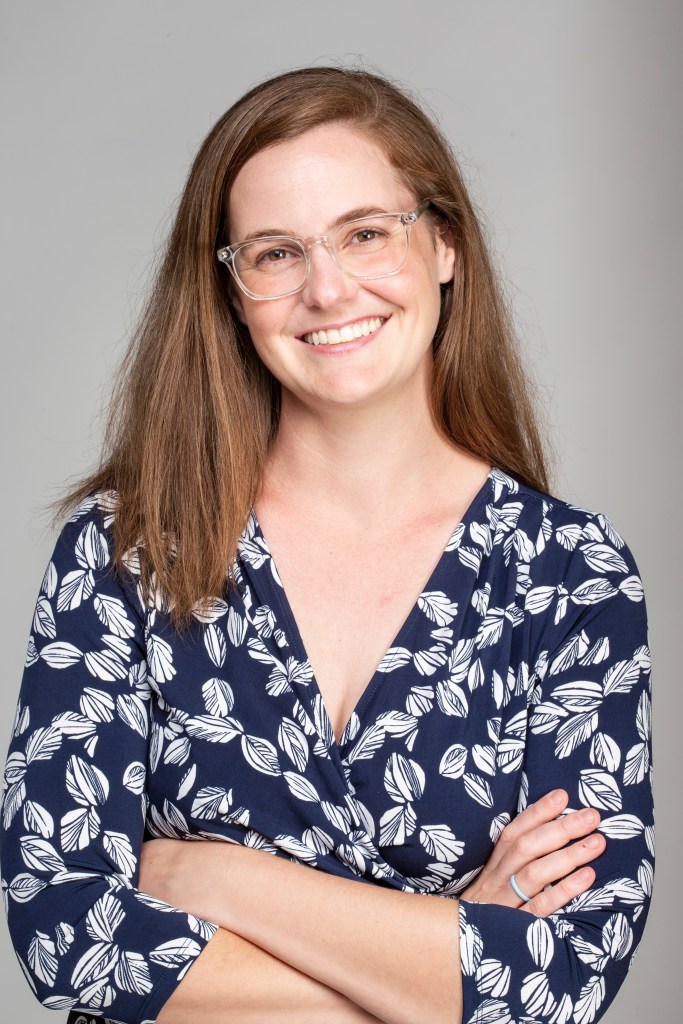
The two strongest candidates in this race for retiring council member David Cox’s seat are Minu Lee and Megan Patton. We like both but are endorsing Patton.
Minu Lee is a college student at NC State University, the son of immigrants who own a small cleaning business, and a substitute teacher for Wake County Public Schools. A Korean American, Lee is endorsed by the National Asian American PAC and would bring a perspective to the council that’s well represented in his growing district but rarely represented in city government. Lee’s platform is also solidly pro-housing, with an eye toward improving infrastructure and encouraging entrepreneurship. But at age 21, we’re not sure Lee has the experience he’d need to represent a district that encompasses so many disparate groups of people.
Megan Patton lacks political experience, too, but she has notable professional and civic experience—as a customer service manager at a local company and a volunteer with Moms Demand Action—that speak well to her being prepared to represent District B. A mother and advocate for families and working people, Patton has a thorough grasp of the housing dearth that Raleigh currently faces and a thoughtful approach to addressing it that’s not just rubber-stamping. Patton doesn’t pretend to have all the answers, but she expresses a willingness to learn and, more importantly, to collaborate.
Frank Pierce is a small business owner from southeast Raleigh. He ran for a state house seat this spring, and his platform as a municipal candidate isn’t terribly detailed. Jakob Lorberblatt is also running for the seat but doesn’t have a very detailed platform.
District C: Corey Branch
Other candidates: Frank Fields, Wanda Hunter

We think Corey Branch has done a good enough job over the past three terms to earn our endorsement again as District C representative over challengers Wanda Hunter, a nonprofit worker and staunch advocate for social justice, and small business owner Frank Fields.
In 2019, Branch was on the right side of the vote to abolish CACs. He has also done important work for the district advocating for more grocery stores in food deserts, prioritizing transit as chair of the Transportation and Transit Committee, volunteering for the Raleigh Transit Authority, and working on tax relief for retired homeowners. His critics say Branch isn’t as engaged with the concerns of his majority-Black district as he could be, but it’s not clear how his opponents, who don’t offer much up in terms of detailed policy specifics, would do better. Branch is an experienced leader on Raleigh’s council. We need that and we’re endorsing him for another term.
District D: Jane Harrison and Jennifer Truman
Other candidates: Todd Kennedy, Rob Baumgart

Jennifer Truman is an architectural designer and self-described optimist, and her contributions to the city are considerable. An active member of the Southwest CAC before the groups were disbanded, Truman understands that, though imperfect, one of the strengths of the CACs was facilitating community engagement (though she doesn’t support reinstating them). Truman contributed to the Dix Park master planning process, was a member of the community leader group for the Dix Edge study, and has served on the Raleigh Transit Authority for a year and a half. A mother of young children, Truman uses her bike and the public transit system to get around the district. She’s also a proponent and activist in the realm of urban agriculture.
Jane Harrison is also an excellent candidate who got her civic start leading the West Raleigh CAC, which she reestablished after CACs were dissolved to keep in communication with her neighbors in the district. An NC State researcher and a specialist in natural resources management, Harrison is no stranger to collaboration with city and elected officials. She embraces growth and has ideas about how to build on existing policy, such as embedding an affordability component to Raleigh’s new missing middle housing policy, as well as adding environmental protection and community engagement measures. Harrison says Raleigh needs an anti-displacement plan and looks to cities such as Portland as examples of how to approach that.
Environmental consultant Todd Kennedy, who has served as chair of Raleigh’s Human Relations Commission and vice chair of the city’s Environmental Advisory Board, wouldn’t be a bad pick for this seat either.
Rob Baumgart, a self-employed landlord and small business owner, has a lot of business experience but not as much civic experience as the other candidates.
District E: David Knight

Other candidates: Christina Jones
There have been grumblings from District E residents about David Knight’s willingness to engage with them, and he doesn’t hide his disdain for CACs, which he publicly called “inappropriate” and “undemocratic.” Still, we think he has a good idea of what’s democratic and what’s not: he was reportedly the only council member to cast a vote against moving the municipal election to 2022 in a closed session meeting.
Knight’s opponent, Christina Jones, says she is the longest-serving chair of the Raleigh CAC. While Jones definitely favors CACs and is a proponent of community engagement, she seems to be against most everything else. Jones doesn’t support infill development along transit corridors, the missing middle housing policy, or the elimination of the parking minimum. As a member of the city’s parks board for two years, Jones says she doesn’t support the city’s parks bonds. Jones seems to know what the city needs: affordable housing, more and better-staffed transit options, and yes, better community engagement. But she doesn’t put forward practical ideas to get us there. Jones says she’ll advocate for inclusionary zoning (currently a legal land mine due to state laws) and light rail (would be nice, but that’s not in the cards).
With the influx of newcomers to the city council, District E would do better to stick with someone who has experience governing. This year, that’s David Knight.
At Large: Jonathan Melton, Stormie Forte or Anne Franklin
Other candidates: Joshua Bradley, Portia Rochelle, James Bledsoe, John Odom

For the two city council at-large seats Raleigh residents may vote for, we’re again endorsing candidates with experience in city government. We’re, again, endorsing more candidates than there are seats because we think there are three candidates who are worthy of your votes.
For the first seat, we endorse incumbent Jonathan Melton, a family law attorney. Melton is a collaborative, thoughtful presence at
the council table. He takes a pragmatic approach to governing and has a holistic understanding of the issues that affect all of Raleigh’s five different districts. Melton supports policies that he says he feels will support the city’s growth, including investment in transit and affordable housing. On the first point, Melton led the way on securing city contracts with electric scooter companies and they now operate in Raleigh with few issues. On the second point, Melton has supported policies such as legalizing missing middle housing that will provide more options for new housing that can be built across the city as opposed to limiting new construction to single-family homes. Melton takes the time to summarize each city council meeting, describing and explaining topics of discussion and clarifying any votes the council has taken in transparent, informative terms. And constituents say Melton is responsive to emails and social media queries and is always willing to engage in discussion. Melton has more than earned another term and we’re happy to recommend him.
For the second at-large seat, we endorse either Stormie Forte or Anne Franklin. Hear us out.
Forte and Franklin both have experience serving in city government. Some say the time has come and gone for the 78-year-old Franklin and would like to see what Forte, who was appointed to fill Saige Martin’s District D seat following his resignation, will do with another term in office. While Forte, an attorney, realtor, and court mediator hasn’t mounted much of a campaign this election cycle we, too, would like to see what Forte does with another term.
On the other hand, Franklin, a community organizer, has been active in Raleigh city politics for a long time, serving three at-large terms on the council in the ‘80s and ‘90s. Since then, she has served on the Dix Park Conservancy’s Legacy Committee and chaired the board of directors for Southeast Raleigh’s Partners for Environmental Justice. Franklin has deep roots and strong connections in disparate Raleigh communities and has a proven ability to work collaboratively to get things done.
Disclosure: Franklin is a former neighbor of INDY Week editor Jane Porter.
City of Raleigh Parks and Recreation Bonds: Vote YES
We already know parks and green spaces promote health, wellness, and a higher quality of life for residents. They also protect water quality, remove air pollution, and provide spaces for people to connect with one another, as we saw during the height of the COVID pandemic. Recently, researchers have even found correlations between more green space and less crime.
Raleigh’s $275 million parks bonds proposal creates several new greenways and pays for wide-ranging improvements to new and existing parks, including expanding the tennis courts at Biltmore Hills Park, with related infrastructural improvements; stream restoration, flood, and stormwater management at Devereux Meadows; and construction of an 18-acre Gipson Play Plaza at Dix Park.
The bond also provides funding for Phase II of the Chavis Park master plan, paying for a new aquatic center and outdoor pool at the Historic John Chavis Memorial Park. The Phase I improvements to Chavis Park have transformed this Southeast Raleigh space into an amenity that has enhanced the overall well-being of residents and visitors of all ages during the pandemic, and the community in Southeast Raleigh has advocated for improvements to Chavis Park for nearly two decades.
Yes, $275 million is a lot of money, and residents will see a bump in their tax bills. But we feel these bonds are a worthwhile investment in the city’s future and its residents, and we give them our full support.
Editor’s note: Jennifer Truman, who we originally described as an architect, is in fact an architectural designer. We apologize for the error on our part.
Support independent local journalism. Join the INDY Press Club to help us keep fearless watchdog reporting and essential arts and culture coverage viable in the Triangle.
Send comments to [email protected].

You must be logged in to post a comment.